Best Fitness Trackers of 2026
Google Fitbit Air is the best fitness tracker of 2026: a 12-gram screenless band for iPhone and Android. Apple Watch Series 12 and Garmin CIRQA are finalists.
The verdict
Google Fitbit Air wins 2026 because it puts an FDA-cleared AFib rhythm alert into a light, screen-free band that pairs with Android and iPhone and does its core tracking without a paid plan. Apple Watch Series 12 is the finalist for iPhone owners who want the deepest set of health features, and Garmin CIRQA is the finalist for people who want ten-day battery life and no subscription.
| Award | Product | Best for |
|---|---|---|
| Winner | Google Fitbit Air | Screen-free all-day tracking on any phone |
| Finalist | Apple Watch Series 12 | iPhone owners who want the fullest health toolkit |
| Finalist | Garmin CIRQA Smart Band | Long battery life with no subscription at all |
| Commended | Google Pixel Watch 5 | Android users who value emergency safety features |
| Commended | Samsung Galaxy Watch9 | Galaxy phone owners tracking sleep and cardio load |
| Commended | WHOOP MG | Members who want recovery coaching plus an ECG |
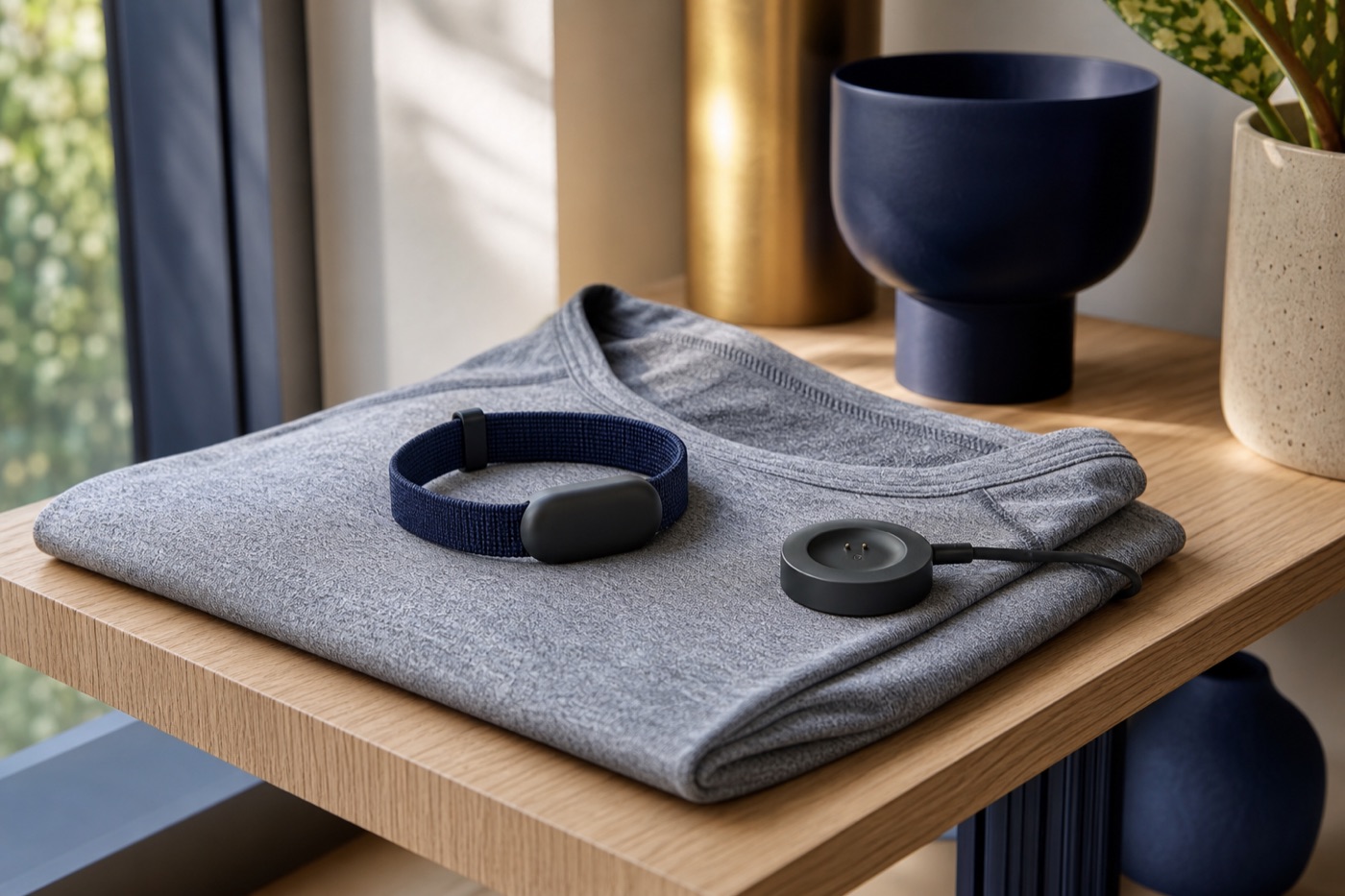
The best fitness tracker of 2026 is the Google Fitbit Air. It is a 12-gram band with no display that runs for up to a week, pairs with both Android phones and iPhones, and handles its core tracking without a paid plan. Apple Watch Series 12 and Garmin’s CIRQA Smart Band are the finalists, and three more devices earned a commendation for doing one job especially well.
What decided this category
Wrist trackers split into two camps this year: full smartwatches that keep adding regulated health features, and quiet bands with no screen that are easy to forget you are wearing. Every product was scored on the five measures laid out on our judging criteria page, but two of them carried more weight than usual here. Published evidence mattered because makers now sell FDA-cleared features right next to features they label wellness-only, and buyers deserve to know which is which. Access mattered because a tracker that pairs with only one brand of phone, or keeps its useful insights behind a membership, serves fewer people. Everything below is drawn from what the makers publish, FDA records and reporting by established outlets. None of it comes from wearing the devices.
Winner: Google Fitbit Air
Google announced the Fitbit Air on May 7, 2026, and US sales began on May 26. All of the electronics sit in a removable, pill-shaped module that Google calls a pebble. According to 9to5Google’s launch report, the pebble weighs 5.2 grams by itself and the whole tracker about 12 grams with its strap. There is no screen. Your data lives in the Google Health app, which is what the Fitbit app became this year.
The sensor list is short but sensible: an optical heart rate sensor, an accelerometer and gyroscope, red and infrared light for blood oxygen, and a temperature sensor that follows skin temperature variation. From those, the Air reports 24/7 heart rate, alerts when your heart rate runs unusually high or low, heart rate variability, sleep and automatic activity tracking. A software update rolling out in October raises the number of workout types it can detect on its own from 10 to more than 100.
The feature that tipped the decision is its irregular heart rhythm notification for possible atrial fibrillation. Fitbit’s optical AFib algorithm received FDA clearance in April 2022, and Google says the validation drew on the Fitbit Heart Study, which enrolled 455,699 participants. Putting a cleared screening feature into the simplest, lightest device in Google’s lineup is the most useful kind of novelty this year, because it reaches people who would never strap on a full smartwatch.
The practical details also line up. Google rates the battery at up to seven days, a five-minute charge buys roughly a day of use, and the band is water resistant to 50 meters. It works with Android and iOS, and it can share one account with a Pixel Watch, with the app switching between the two devices automatically. On privacy, Google’s Google Health help center states that health and wellness data is not used for Google ads and that the company never sells personal information.
Who should skip it: anyone who wants to glance at pace or heart rate mid-run, because there is nothing to glance at. The coaching layer also costs extra. Each Air includes three months of Google Health Premium, which is where the AI-driven Google Health Coach and the new Health Guardian trend reports live, and after that the plan is optional rather than required for basic tracking.
Finalist: Apple Watch Series 12
Apple’s September watch is the most complete health device in this group, and for iPhone owners it is an easy recommendation. Its Health Sensing System pairs new optical and electrical heart sensors with the S11 chip. Apple says Series 12 reads heart rate every five seconds, all day long, and samples heart rate variability up to 24 times more often than before. A new Readiness score from 0 to 10 blends recent activity, training load, vitals and sleep, then labels the day Recover, Pace Yourself, Ready or Go For It.
Its regulated features run deeper than anything else here. Hypertension notifications, which the FDA cleared in September 2025, can flag patterns consistent with high blood pressure; Apple says they are not meant for people under 22, people already diagnosed or anyone who is pregnant. Sleep apnea notifications, the ECG app and irregular rhythm notifications complete the set. Apple’s health page says Health data is encrypted on the device and, with two-factor authentication turned on, end-to-end encrypted in iCloud.
It finished second for two reasons. It requires an iPhone 11 or later, which leaves out every Android household, and Apple rates everyday battery life at up to 24 hours, so charging is close to a daily habit.
Finalist: Garmin CIRQA Smart Band
Garmin’s first screen-free band, announced July 21, is the strongest pick for anyone tired of monthly fees. Garmin says no subscription is required, and it rates battery life at up to 10 days. The fabric strap can be worn on the wrist or higher up the arm.
Its metrics come straight from Garmin’s watches: Body Battery energy monitoring, Pulse Ox, stress, skin temperature, sleep stages and a sleep score, HRV status, training readiness, VO2 max and recovery time. It records activities automatically, lets you log more than 80 activity types by hand, and borrows your phone’s GPS for outdoor sessions. It can also sync with the FDA-cleared Natural Cycles app, which carries its own subscription.
Evidence is what held it back. Garmin labels Pulse Ox as not a medical device, and its announcement lists no FDA-cleared feature for the band itself, nothing to match the winner’s rhythm alert. Skip it if you like live numbers during a workout, since results appear in Garmin Connect only afterward.
Commended: Google Pixel Watch 5
The Pixel Watch 5, on sale since August 20, earns its place on safety. Loss of Pulse Detection, cleared by the FDA in 2025 starting with Pixel Watch 3, can recognize signs that your pulse has stopped and prompt a call to emergency services. The watch also carries an ECG app and irregular rhythm alerts. Google’s newest addition, Breathing Emergency Detection, has not received FDA clearance and is launching first in selected European markets, so US buyers should not count on it yet. Google sells the Pixel Watch as part of its Android lineup, so iPhone owners should look elsewhere.
Commended: Samsung Galaxy Watch9
Samsung’s July watch suits people already carrying a Galaxy phone. Its BioActive Sensor combines optical, electrical heart signal and body composition measurements, and new Daily Cardio Load and Heart Health Score features help pace training. Samsung says its sleep apnea feature is backed by FDA clearance; that feature needs a Galaxy phone and is limited to adults. The watch itself requires an Android phone with Google services.
Commended: WHOOP MG
WHOOP’s medical-grade band adds an FDA-cleared ECG, which the company calls Heart Screener, to its recovery and strain coaching, and WHOOP rates the battery at 14 days. Its Blood Pressure Insights feature drew an FDA warning letter in July 2025; in June 2026 the agency closed the matter after WHOOP modified the feature and its labeling under updated general wellness guidance. Everything runs on a paid WHOOP membership, which is why it sits below the subscription-optional bands.
The six side by side
| Product | Award | Display | Pairs with | Battery (maker’s figure) | Regulated feature |
|---|---|---|---|---|---|
| Google Fitbit Air | Winner | None | Android, iPhone | Up to 7 days | FDA-cleared AFib rhythm notifications |
| Apple Watch Series 12 | Finalist | Yes | iPhone only | Up to 24 hours | FDA-cleared hypertension notifications |
| Garmin CIRQA Smart Band | Finalist | None | iPhone, Android | Up to 10 days | None listed by Garmin; syncs with Natural Cycles |
| Google Pixel Watch 5 | Commended | Yes | Android | Up to 40 hours (larger size) | FDA-cleared Loss of Pulse Detection |
| Samsung Galaxy Watch9 | Commended | Yes | Android | Not given in hours | Sleep apnea feature (Samsung cites FDA clearance) |
| WHOOP MG | Commended | None | iPhone, Android | 14 days | FDA-cleared ECG |
Which tracker suits your routine
- You switch phones, or your household mixes Android and iPhone: Fitbit Air.
- You own an iPhone and want every health feature available: Apple Watch Series 12.
- You hate charging and never want another monthly bill: Garmin CIRQA.
- You run with an Android phone and care about emergency features: Pixel Watch 5.
- Your phone is a Galaxy and sleep apnea screening matters to you: Galaxy Watch9.
- You enjoy daily coaching and accept a membership: WHOOP MG.
If counting steps is all you need, our guide to the best step counter apps covers options that need no hardware at all, and the best smart rings of 2026 cover trackers you wear on a finger.
Where 2026 left the category
The year’s clearest shift was away from screens. Google and Garmin both launched display-free bands within three months of each other, and the better of the two brought a cleared heart rhythm feature with it. Smartwatches did not stand still, and Apple’s new sensors and Readiness score make Series 12 the richest option for iPhone owners. One caution applies to all of them: a hypertension, irregular rhythm or sleep apnea notification is a reason to book time with a doctor, and none of these devices diagnoses a condition.
2026 badges in this category
Winners and finalists may show their badge for free. It must link back to this page and not be altered. Badge rules.
Google Fitbit Air
Winner, Fitness Trackers 2026
Embed code
<a href="https://innovationprizes.org/2026/best-fitness-trackers/"><img src="https://innovationprizes.org/badges/2026-best-fitness-trackers-winner.svg" alt="Innovation Prizes 2026 Winner: Fitness Trackers" width="160" height="160"></a>
Apple Watch Series 12
Finalist, Fitness Trackers 2026
Embed code
<a href="https://innovationprizes.org/2026/best-fitness-trackers/"><img src="https://innovationprizes.org/badges/2026-best-fitness-trackers-finalist.svg" alt="Innovation Prizes 2026 Finalist: Fitness Trackers" width="160" height="160"></a>
Garmin CIRQA Smart Band
Finalist, Fitness Trackers 2026
Embed code
<a href="https://innovationprizes.org/2026/best-fitness-trackers/"><img src="https://innovationprizes.org/badges/2026-best-fitness-trackers-finalist.svg" alt="Innovation Prizes 2026 Finalist: Fitness Trackers" width="160" height="160"></a>
Questions people ask
Does the Fitbit Air need a subscription?
No. The band ships with three months of Google Health Premium, which unlocks the Google Health Coach and the monthly trend reports, but heart rate, sleep and activity data stay available in the Google Health app once that trial ends.
Can a band with no screen track workouts properly?
Both screen-free picks log exercise automatically. The Air can also start a session from your phone, and CIRQA has a side button for a favorite activity. The compromise is timing: pace, heart rate and training effect show up in the app after you finish rather than on your wrist while you move.
Which of these trackers have FDA-cleared features?
Apple lists hypertension and sleep apnea notifications, the ECG app and irregular rhythm notifications. Fitbit's optical AFib algorithm is cleared, Pixel Watch has cleared Loss of Pulse Detection, Samsung cites clearance for its sleep apnea feature and WHOOP MG has a cleared ECG. Blood oxygen, vitals and blood pressure trend tools are sold as wellness features.
Will an Apple Watch work with an Android phone?
Apple's requirements for watchOS 27 call for an iPhone 11 or later, or a second-generation iPhone SE or later, running iOS 27. Android owners should look at the Fitbit, Pixel, Samsung, Garmin or WHOOP options instead.
Sources
Prize pages are written and reviewed by the Innovation Prizes editors from what each maker publishes, FDA records and published research. Nobody pays to enter or to win. About the prizes.