Best Sleep Trackers and Apps for 2027
Apple Watch Series 12 is our top sleep tracker for 2027, pairing a morning readiness score with FDA-cleared apnea alerts. Oura and Samsung are the finalists.
The verdict
For the year ahead, the Apple Watch Series 12 takes the prize: it turns each night into a morning readiness call and keeps an FDA-cleared sleep apnea screen that needs no setup after the first enrollment. The Oura Ring 5 earns a finalist spot as the choice for anyone who would rather not sleep in a watch, and the Samsung Galaxy Watch9 takes the other as the strongest option for Android households.
| Award | Product | Best for |
|---|---|---|
| Winner | Apple Watch Series 12 | iPhone owners who want sleep to steer the day |
| Finalist | Oura Ring 5 | Light sleepers who find watches uncomfortable at night |
| Finalist | Galaxy Watch9 Samsung | Android users who want coaching plus apnea screening |
| Commended | Pod 6 Eight Sleep | Couples who sleep at different temperatures |
| Commended | Index Sleep Monitor Garmin | Garmin watch owners who want a lighter overnight wearable |
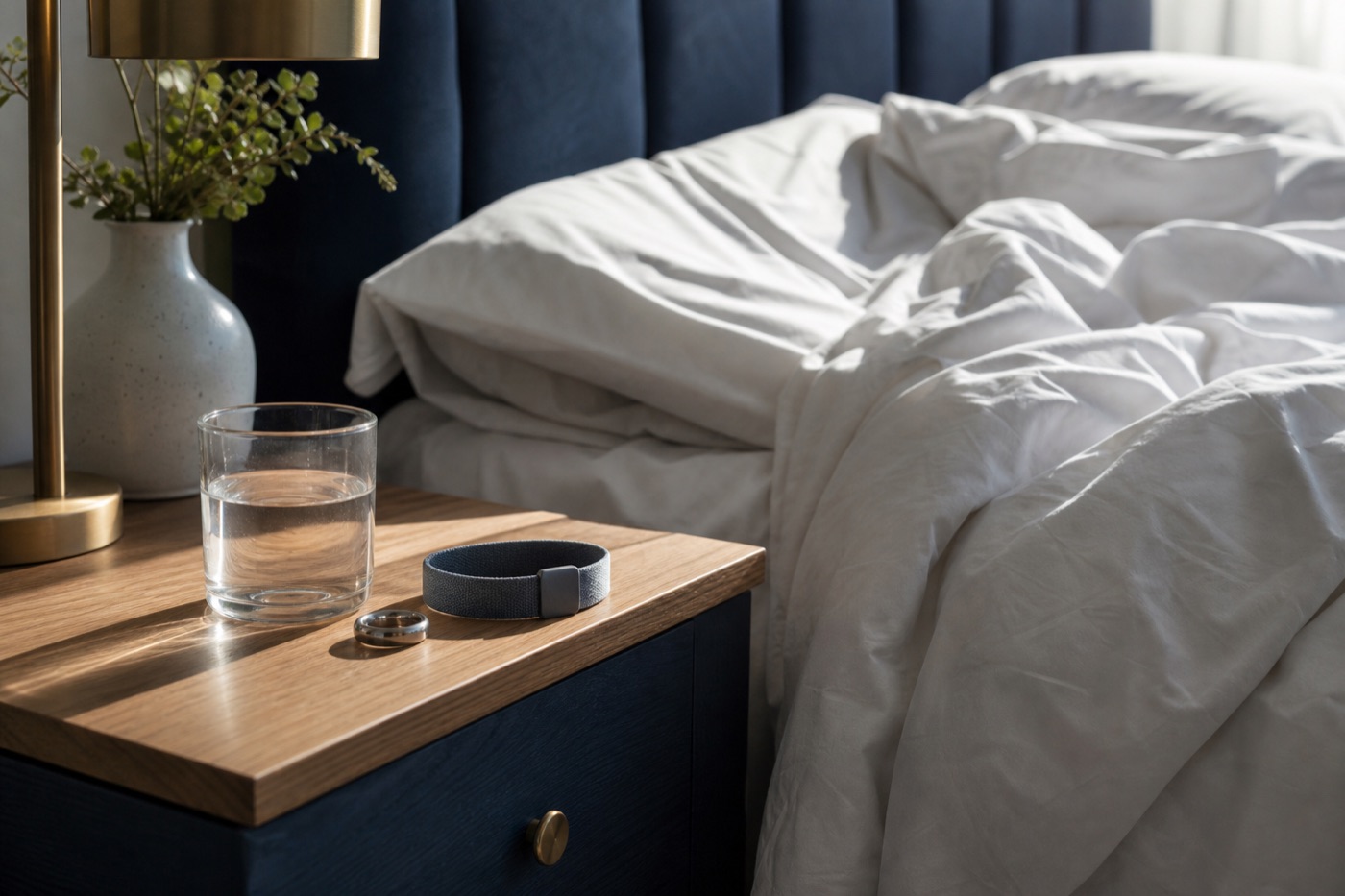
If you are buying one sleep tracker to live with through 2027, make it the Apple Watch Series 12. It is the first Apple watch that converts a night of data into a single morning recommendation, and it keeps the FDA-cleared apnea screen that Apple has offered since 2024. The Oura Ring 5 and Samsung’s Galaxy Watch9 are close behind, each for a different kind of sleeper.
What 2026 changed for sleep tracking
Three shifts shaped this edition. First, readiness scores went mainstream: Apple, Oura and Samsung now all distill recent sleep and activity into a number meant to answer “push or rest?” Second, overnight breathing became a standard talking point. Oura added a 30-day breathing view, and Samsung said at its July Unpacked event that its FDA-cleared sleep apnea feature is coming to the Galaxy Ring this fall. Third, the subscription question stayed front and center: Oura and Eight Sleep tie key features to paid plans, while Apple builds its sleep features into watchOS, and that difference adds up over years of ownership.
How the 2027 picks were weighed
A forward-looking award has to reward what a product will still be doing well in twelve months. That tilted the scoring toward devices with regulatory clearances and published validation, since those claims do not evaporate with the next app update, and toward hardware that already runs the maker’s newest software. Ongoing cost of ownership was judged under access, without counting dollars: a required plan scored lower than features that ship with the device. How each company stores and shares overnight data was the tiebreaker. Our judging page explains the five weights in full.
Winner: Apple Watch Series 12
Apple announced the Series 12 on September 9, 2026, with what it calls a new Health Sensing System: redesigned optical and electrical sensors that read heart rate every five seconds and heart rate variability as often as every five minutes. That faster sampling feeds the feature that won this prize, readiness.
Readiness gives a 0-to-10 score each morning built from recent activity, vitals and sleep, then attaches one of four plain labels: Recover, Pace Yourself, Ready or Go For It. Apple says the score keeps updating through the day as new data arrives, and overnight vitals now show Recovery HRV against your personal baseline. For anyone who has stared at a sleep chart and wondered what to do with it, that translation is the point.
Underneath sits the sleep score Apple introduced with watchOS 26. According to Apple, duration is worth 50 of its 100 points, bedtime 30 and interruptions 20, which rewards a consistent schedule rather than a single long night.
The regulatory story is what separates Apple from most rivals. Its Sleep Apnea Notification Feature was cleared through a 510(k) on September 13, 2024. The FDA summary describes a passive design that reads the accelerometer over 30-day periods and needs no action after enrollment. In a study that enrolled 1,499 people, the feature flagged 66.3% of adults with moderate-to-severe apnea and stayed silent for 98.5% of those with normal-to-mild breathing. Put simply, it is tuned to avoid false alarms, and the filing is explicit that silence from the watch is no proof of healthy breathing.
Privacy scored well too. Apple keeps Health data encrypted on the iPhone and the watch, and with two-factor authentication turned on the iCloud copy is end-to-end encrypted, so that, in the company’s words, not even Apple can access it.
Should you upgrade? Owners of a Series 9, 10 or 11 already get sleep score and apnea notifications; readiness and the faster sensors are the reasons to move. Owners of a Series 8 or older have a stronger case, because Apple lists watchOS 27 for Series 9 and later, SE 3 and Ultra 2 and later.
Who should pass: Android users, since the watch has to be paired with an iPhone 11 or newer running iOS 27, and anyone unwilling to charge daily. Apple’s battery rating is 24 hours of normal use, stretching to 38 hours with Low Power Mode on, so wearing it to bed means building a daily charging slot into your routine.
Finalist: Oura Ring 5
The Ring 5 remains the most comfortable way to collect a full night of data, and Oura spent 2026 adding to it. On October 6 the company began expanding Health Radar, including its 30-day Nighttime Breathing view, to more than 30 new markets, including the EU, the UK and Canada, after a first rollout in the US. Oura states plainly that Health Radar is a general wellness feature, not a diagnostic one.
For upgraders, the math is specific. Oura says the Ring 5 lasts six to nine days on a charge and is 40% smaller than the Ring 4, but it comes in fewer sizes and holds less offline data. Because Health Radar also runs on Gen3 and newer rings, a Ring 4 owner gives up little by waiting. Your existing membership carries over, and that membership is also the catch: Oura ties personalized insights to it.
Finalist: Samsung Galaxy Watch9
Samsung’s July watch brings one of the broadest sleep toolkits available to Android users. Sleep Coaching runs a three-to-four-week program, Bedtime Guidance suggests a window after three nights, and an Energy Score from 0 to 100 plays the readiness role. Vitals builds a baseline from seven nights of heart rate, HRV, respiration, skin temperature and blood oxygen.
Its Sleep Apnea feature, which Samsung’s US page says is regulated by the FDA as a medical device, works differently from Apple’s: it reads blood oxygen over two nights you choose, within a 10-day window, and is meant for adults 22 and older. The comparison table in Apple’s FDA filing lists Samsung’s feature, from its own separate study, at 82.7% sensitivity and 87.7% specificity: more cases caught, more false alarms. It requires an Android phone on Android 13 or later, and Samsung advises against using it during pregnancy.
Commended: Eight Sleep Pod 6
Not a wearable at all, the Pod 6 is a cover that goes over an existing mattress and cools or heats each side of the bed between 55°F and 110°F. Eight Sleep says it makes up to 40 micro-adjustments while you sleep, based on biometric and room readings, summarizes the night in its app and wakes each sleeper with a thermal and vibration alarm. An optional Base raises the bed when snoring is detected. It is sold with the company’s Autopilot plan, and Eight Sleep’s own FAQ explains why the Pod needs it.
Commended: Garmin Index Sleep Monitor
Garmin’s upper-arm band is the quiet pick for people who already run their day on a Garmin watch but find it bulky in bed. It lasts up to seven nights, tracks sleep stages, HRV status, skin temperature and breathing variations, and syncs to Garmin Connect, where Garmin says existing features remain free. Its overnight numbers can be merged with a compatible Garmin watch’s daytime data, so the watch can stay on the charger while you sleep. For people without a Garmin watch, the case is weaker: the band is screenless and does its work only at night.
The 2027 shortlist at a glance
| Product | Strongest reason to buy | Main catch | Ongoing plan |
|---|---|---|---|
| Apple Watch Series 12 | Readiness plus 510(k)-cleared apnea alerts | Daily charging; iPhone only | Features built into watchOS |
| Oura Ring 5 | Comfort and multi-day battery | Membership for insights | Oura Membership |
| Samsung Galaxy Watch9 | Coaching, bedtime timing, apnea screen | Android 13 or later only | Samsung account and Samsung Health app |
| Eight Sleep Pod 6 | Two-zone temperature control | Plugged-in hub beside the bed | Autopilot plan |
| Garmin Index Sleep Monitor | Week-long battery, no screen | Night-only device | Connect+ optional |
Buying advice by situation
- Your phone is an iPhone and you can charge every day: Apple Watch Series 12.
- You sleep badly with anything on your wrist: Oura Ring 5, or the Garmin band if you already own a Garmin watch.
- You use Android and want a clinician-ready apnea check: Galaxy Watch9.
- Heat, not data, is what keeps you up: Eight Sleep Pod 6.
- You already own a Series 9 or a Ring 4: keep it for now unless readiness or a smaller ring matters to you.
Before you commit for the year
The best sleep device in 2027 is the one you will wear or use every single night, and on paper each of the top three handles the core job well. Apple wins because readiness, regulated screening and strong encryption arrive together without a separate plan. If winding down is the bigger struggle than measuring, the 2027 meditation app picks cover the other half of a good night.
2027 badges in this category
Winners and finalists may show their badge for free. It must link back to this page and not be altered. Badge rules.
Apple Watch Series 12
Winner, Sleep Trackers and Apps 2027
Embed code
<a href="https://innovationprizes.org/2027/best-sleep-trackers/"><img src="https://innovationprizes.org/badges/2027-best-sleep-trackers-winner.svg" alt="Innovation Prizes 2027 Winner: Sleep Trackers and Apps" width="160" height="160"></a>
Oura Ring 5
Finalist, Sleep Trackers and Apps 2027
Embed code
<a href="https://innovationprizes.org/2027/best-sleep-trackers/"><img src="https://innovationprizes.org/badges/2027-best-sleep-trackers-finalist.svg" alt="Innovation Prizes 2027 Finalist: Sleep Trackers and Apps" width="160" height="160"></a>
Galaxy Watch9
Finalist, Sleep Trackers and Apps 2027
Embed code
<a href="https://innovationprizes.org/2027/best-sleep-trackers/"><img src="https://innovationprizes.org/badges/2027-best-sleep-trackers-finalist.svg" alt="Innovation Prizes 2027 Finalist: Sleep Trackers and Apps" width="160" height="160"></a>
Questions people ask
Is it worth upgrading from an Apple Watch Series 9, 10 or 11 for sleep?
Only if you want the readiness score and the faster heart rate and HRV sampling, which Apple reserves for the Series 12 and Ultra 4. Sleep score and sleep apnea notifications already run on those older models with current software.
Which sleep apnea screen is more sensitive, Apple's or Samsung's?
The two were measured in separate studies, so the comparison is rough: Samsung's two-night check reported higher sensitivity, and Apple's always-on 30-day check reported higher specificity. Neither is a diagnosis, and anyone with symptoms such as loud snoring, gasping awake or heavy daytime sleepiness should ask a doctor about a sleep study.
Will my older Oura ring get the new breathing features?
Oura says Health Radar, including Nighttime Breathing, works with the Gen3 ring and newer on iOS and Android. You do need an active membership to see it.
Do smart beds track sleep as well as wearables?
They read from beneath the sleeper instead of from the skin, which suits people who refuse to wear anything. Eight Sleep calls its cover sensors clinical-grade, but the stronger reason to buy a smart bed is temperature control rather than measurement.
Sources
Prize pages are written and reviewed by the Innovation Prizes editors from what each maker publishes, FDA records and published research. Nobody pays to enter or to win. About the prizes.