Best Glucose Monitors for 2027
Dexcom Stelo is the best glucose monitor for 2027 for anyone not on insulin. FreeStyle Libre 3 Plus leads the prescription picks; Abbott Lingo is a finalist.
The verdict
Stelo keeps the top spot for 2027: no other over-the-counter sensor carries a label covering everyone from toddlers to adults who skip insulin. FreeStyle Libre 3 Plus earns a finalist place as the prescription system with the broadest pump reach, and Lingo, also from Abbott, takes the other finalist place as the short-trial option for grown-ups.
| Award | Product | Best for |
|---|---|---|
| Winner | Stelo Dexcom | Families and adults who skip insulin and prescriptions |
| Finalist | FreeStyle Libre 3 Plus Abbott | Pump users planning a new system |
| Finalist | Lingo Abbott | Adults testing CGM data with no auto-renewal |
| Commended | Dexcom G7 15 Day | Longest Dexcom wear for grown-ups with diabetes |
| Commended | Eversense 365 Senseonics | People who would rather swap sensors once a year |
| Commended | Accu-Chek Guide Me Roche | A quick backup meter that logs to mySugr |
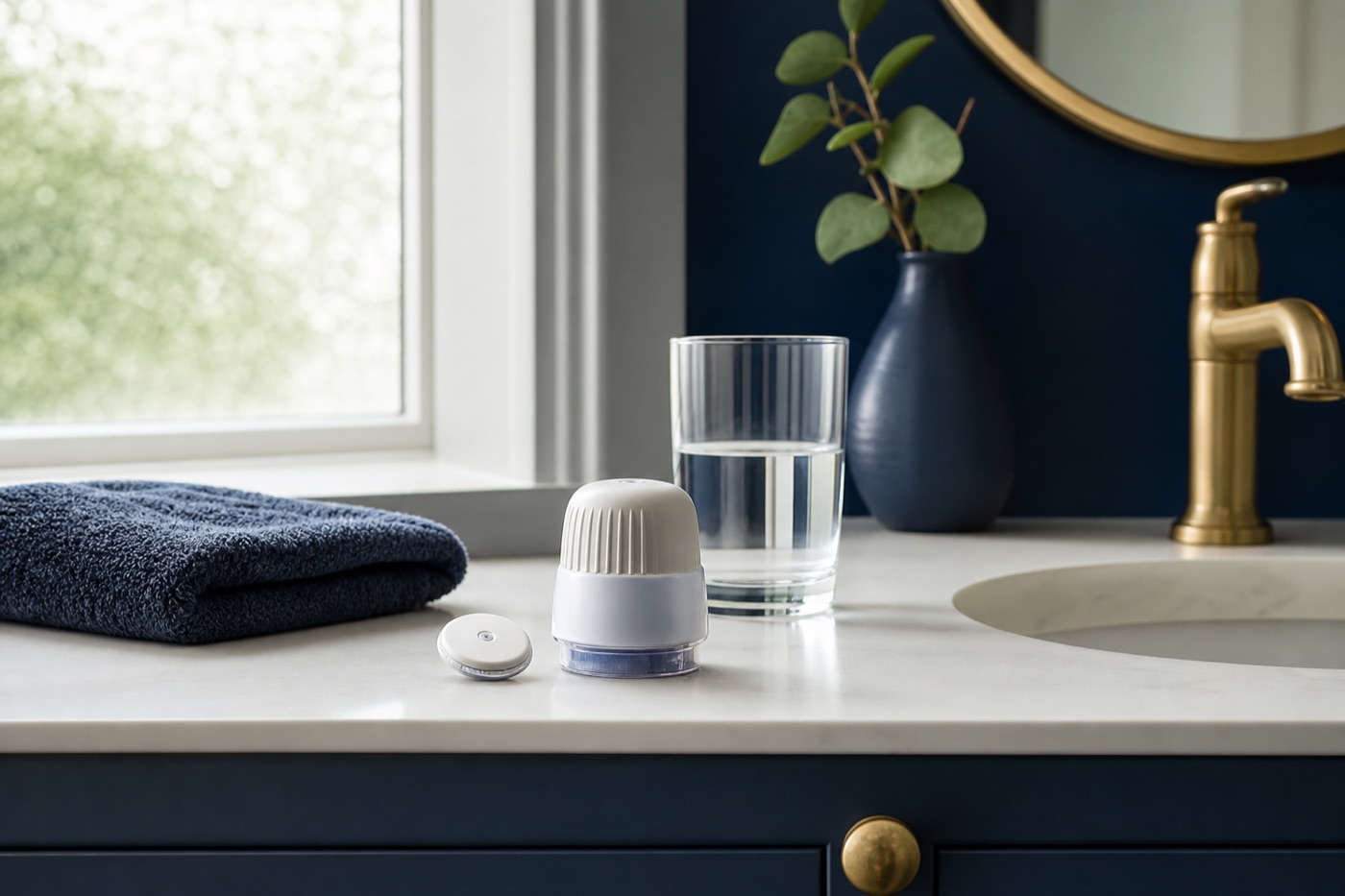
For 2027, the best glucose monitor for anyone not using insulin is still Dexcom’s Stelo, the over-the-counter sensor whose label now starts at age 2. If you take insulin you need a prescription system, and FreeStyle Libre 3 Plus is the strongest choice here thanks to its age range and pump connections. Abbott’s Lingo rounds out the finalists for grown-ups who want to test the idea before committing.
Judging for the year ahead
This edition only considers monitors that are on sale or have an official launch date, which is why one of the most interesting sensors of the year sits outside the list below. Each pick was weighed on the five criteria described on how we judge, and for a medical device two of them did most of the work: published evidence, meaning the FDA’s exact decision and the maker’s own accuracy and wear data, and access, meaning prescription status, age range and phone support. The assessments rest on what Dexcom, Abbott, Senseonics and Roche publish, on regulatory announcements and on trade press, not on anyone wearing a sensor.
What 2026 changed for glucose monitoring
The over-the-counter market grew up. Stelo’s June clearance opened over-the-counter CGM use to children who do not take insulin, and Dexcom followed with a rebuilt app in July. Platform makers moved closer too: in October Google said US users will soon be able to connect Lingo to its Google Health app. On the prescription side, Dexcom’s 15-day G7, which reached US users in December 2025, spent its first full year on the market, and in August the FDA authorized Abbott’s dual glucose and ketone sensor, the first of its kind. For a 2027 buyer, that means more choice at both ends, and more reason to be clear about which group you are in.
Winner: Stelo
Buy Stelo for 2027 if you are curious how meals, workouts, sleep and stress move your glucose and insulin is not part of your routine. Its label now spans toddlers through adults, a range no other over-the-counter sensor matches, and each sensor is designed to run for as long as 15 days. You can buy it once or set up a recurring monthly order, and HSA or FSA money can pay for it.
The app is the part that changed most. Dexcom describes the July release as a complete rethink for US users on both iPhone and Android, meant to make glucose insights easier to act on. Inside, an AI Coach offers tips that Stelo’s site explicitly says are not medical advice, and Nutrisense dietitian sessions are available separately for people who want a human.
What keeps it honest is how plainly Dexcom states limits. In its own study, sensors made it to day 15 in 77.9 percent of cases. The site also advises checking with a healthcare provider before any medication change and confirming with a meter when readings and symptoms disagree.
Who should look elsewhere: anyone on insulin, and anyone who already has a prescription CGM, since Stelo is not designed to replace one.
Finalist: FreeStyle Libre 3 Plus
For people who use insulin and are planning the year ahead, Abbott’s prescription sensor is the most flexible option. It is cleared down to age 2, each sensor runs up to 15 days, and a fresh reading arrives every minute. Abbott claims Libre links with every leading US insulin pump brand, citing internal data, and describes a single-app experience with compatible pumps. Optional alarms warn of highs and lows when the phone is within 33 feet with nothing in the way.
Two notes for planning. Each new sensor needs an hour of warm-up, and fingersticks are still required when alarms do not match how you feel. Abbott’s new Libre Assist relies on generative AI to estimate how a food may affect glucose, and Abbott cautions that the estimate can be wrong and is no basis for treatment.
Finalist: Lingo
Lingo is the low-risk option for any adult wondering whether continuous glucose data would change anything for them. Abbott’s two-week plan comes with one biosensor and, by Abbott’s description, no commitment and no automatic renewal, and first-time buyers can get a refund within 30 days. Each sensor streams readings for two weeks and is replaced free if it fails early.
The app scores glucose impact as a Lingo Count, with meal and workout logging and habit challenges, and it runs on iOS and Android. Abbott restricts Lingo to people 18 and up who are not on insulin and says it is not a diagnostic tool for any disease, diabetes included. That adult-only label is the reason it sits behind Stelo.
Commended: Dexcom G7 15 Day
Dexcom’s longest-wearing sensor is rated for 15.5 days, and its US launch came on December 1, 2025, for adults over 18 with diabetes. Dexcom reports an overall accuracy figure, mean absolute relative difference, of 8.0 percent, and about a quarter of sensors in its study ended before day 15. Children and teens stay on the standard G7, which Dexcom still points them toward.
Commended: Eversense 365
If changing sensors every two weeks is the hardest part of CGM life, Eversense 365 lasts a year. A clinician places it in the upper arm and you wear a removable transmitter over it. It is prescription-only for adults with diabetes, 18 and up, and from day 13 on it asks for one calibration fingerstick a week.
Commended: Accu-Chek Guide Me
Every CGM label still points to a meter for backup checks, and Roche’s Guide Me is a tidy one. Blood can go anywhere along the edge of the strip, results come back in under four seconds, and Bluetooth sends readings to the mySugr app. Roche calls the Guide platform its most accurate ever and cites data on file showing 95 percent of results within 10 mg/dL of the lab reference below 100 mg/dL and within 10 percent at higher levels.
Not on the list yet: Libre Duo 10 Day
The FDA granted Abbott’s Libre Duo 10 Day De Novo authorization on August 25, 2026, after a breakthrough device designation. Abbott calls it the world’s first dual glucose and ketone sensor, intended for people with diabetes ages 2 and older who may be at higher risk of rising ketones, including insulin users and people on SGLT2 inhibitors. It is designed for up to 10 days of wear, and Abbott notes its urgent high ketone alarm may not catch every case. Abbott has not given a launch date, so it waits for a future edition.
The 2027 shortlist in one table
| Product | Award | How you get it | Who it suits | What changed in 2026 |
|---|---|---|---|---|
| Stelo | Winner | Over the counter | Toddlers to adults who skip insulin | Pediatric clearance in June, new app in July |
| FreeStyle Libre 3 Plus | Finalist | Prescription | Insulin users, including young children | Libre Assist food predictions added |
| Lingo | Finalist | Over the counter | Grown-ups trying CGM for two weeks | Google Health connection announced for US users |
| Dexcom G7 15 Day | Commended | Prescription | Adults with diabetes | First full year on sale |
| Eversense 365 | Commended | Prescription, implanted | Adults tired of frequent sensor changes | No 2026 update cited |
| Accu-Chek Guide Me | Commended | Retail meter | Anyone who needs confirmation checks | No 2026 update cited |
Choosing by need
- No insulin, want to learn from your own data: Stelo, or Lingo for a single two-week run.
- Child or teen who does not take insulin: Stelo, under adult supervision.
- Insulin pump user planning a new system: ask your care team about FreeStyle Libre 3 Plus or Dexcom G7 15 Day, and whether Libre Duo is worth waiting for.
- Sensor changes are a burden: Eversense 365, which a clinician implants.
- Everyone with a CGM: keep a meter such as Guide Me for confirmation checks.
Glucose is one of several numbers people track at home; our blood pressure monitor picks for 2027 cover another.
The year ahead
Stelo is the pick because it brings regulated glucose sensing with openly published limits to the largest group of people who do not need insulin, and it now runs on a modern app on both phone platforms. Prescription users will want to watch Libre Duo’s launch. Whatever you wear, treat the numbers as material for a conversation with your doctor, and get medical advice before acting on them, above all when diabetes or glucose-lowering medicine is involved.
2027 badges in this category
Winners and finalists may show their badge for free. It must link back to this page and not be altered. Badge rules.
Stelo
Winner, Glucose Monitors 2027
Embed code
<a href="https://innovationprizes.org/2027/best-glucose-monitors/"><img src="https://innovationprizes.org/badges/2027-best-glucose-monitors-winner.svg" alt="Innovation Prizes 2027 Winner: Glucose Monitors" width="160" height="160"></a>
FreeStyle Libre 3 Plus
Finalist, Glucose Monitors 2027
Embed code
<a href="https://innovationprizes.org/2027/best-glucose-monitors/"><img src="https://innovationprizes.org/badges/2027-best-glucose-monitors-finalist.svg" alt="Innovation Prizes 2027 Finalist: Glucose Monitors" width="160" height="160"></a>
Lingo
Finalist, Glucose Monitors 2027
Embed code
<a href="https://innovationprizes.org/2027/best-glucose-monitors/"><img src="https://innovationprizes.org/badges/2027-best-glucose-monitors-finalist.svg" alt="Innovation Prizes 2027 Finalist: Glucose Monitors" width="160" height="160"></a>
Questions people ask
When will Abbott's glucose and ketone sensor reach the US?
The FDA authorized Libre Duo 10 Day on August 25, 2026, and Abbott has said only that it expects a US launch before the end of the year. It also expects the sensor to work with the Beta Bionics iLet and Sequel twiist systems by the end of 2026, and with Insulet and Tandem devices in 2027.
Can a teenager use Stelo?
Yes, provided they do not take insulin. The June clearance lowered Stelo's minimum age to 2, and reporting on that decision stressed adult supervision for children; a teen on insulin needs a prescription CGM instead.
Does a CGM share data with my phone's health app?
Lingo writes to Health Connect on Android and to Apple Health on iPhone, and Google says US users will soon be able to link Lingo to the Google Health app too. Stelo can also run on a compatible Apple Watch once your phone handles the pairing.
Should I replace my meter with a CGM?
That is a conversation for your clinician. Even CGM makers tell users to keep a blood glucose meter for the times a sensor reading and symptoms do not line up.
Sources
Prize pages are written and reviewed by the Innovation Prizes editors from what each maker publishes, FDA records and published research. Nobody pays to enter or to win. About the prizes.